Google’s SEO ranking factors
When it comes to SEO, it’s important to take a good hard look at what Google expects from your content as this will help fuel your marketing strategy. Following SEO best practices is a great way to climb your way up the SERPs. But with Google using over 200 ranking factors in its algorithm, getting things spot on each and every time is not a simple task.
Why is the Algorithm so Complex?
Google dominates the search engine market, maintaining a 92.47 percent market share as of June 2021. As a company, they’ve a job to do. And that’s to deliver the very best content possible for every single search query. This explains why every single Google ranking factor matters as users expect to see content that’s relevant to what they’ve typed into the search bar. In fact, ‘relevant’ isn’t even enough these days. Google attempts to deliver an almost direct answer to any question made through tools such as Featured Snippets.
Google’s algorithms are extensive and complex software programs for a reason. There are 56.5 billion web pages indexed through Google and, with more than 3.5 billion Google searches conducted every single day, the search engine giant needs to be more organised and efficient than we could ever imagine. In fact, most of us take Google search for granted. But without very strict SEO rank factors and an algorithm that’s constantly updated based on real scenarios, the search engine simply wouldn’t work in the way it does today.
SEO Ranking Factors you Need to Know
So which SEO factors for ranking should we be aware of? Loads is the answer. Some are proven, some are controversial, and others are SEO speculation from people who spend a crazy amount of time analysing search outcomes and their correlation to potential algorithm changes. So let’s delve straight in with:
Domain Factors:
#1 Keyword as the first word in a domain
When it comes to thinking up a domain name, word order matters. A domain that starts with a keyword can deliver SEO advantages over domains that have a keyword in the middle or the end. So where possible, kick start your domain with a bang and leave absolutely no doubt in Google’s mind what your business is about. Remember, they’ve a huge amount of content to sift through and you want to be screaming the relevancy of your slice of the web for a relevant search query.
#2 Domain registration length
Contrary to popular belief, SEO ranking doesn’t just become relevant once your website is up and running. It matters from the very beginning, with domain registration length being a Google ranking factor. A Google patent states:
“Valuable (legitimate) domains are often paid for several years in advance, whole doorway (illegitimate) domains rarely are used for more than a year. Therefore, the date when a domain expires in the future can be used as a factor in predicting the legitimacy of a domain.”
#3 Keyword in the sub-domain
Utilising a sub-domain name will help grow your business while simultaneously organising your website for site visitors. It can even have an impact on your overall SEO strategy, allowing you to insert harder-to-rank keywords and improve on-page optimisation.
#4 Domain history
If you want to rank highly, it’s important to think about site ownership consistency. A site with volatile ownership or several drops may tell Google to ‘reset’ the site’s history, negating links pointing to the domain. In certain cases, a penalised domain may also carry the penalty over to the new owner – and that’s definitely baggage you don’t want or need.
#5 Public Vs Private WhoIs
Google is constantly on the lookout for websites that aren’t legit or which have something to hide. After all, they want to deliver sites that have an excellent reputation and that’ll improve the experience of the end-users. According to Google’s Matt Cutts, private whoIs can act as a warning sign. Cutts is quoted as stating:
“When I checked the whoIs on them, they all had “whoIs privacy protection service” on them. That’s relatively unusual. Having whoIs privacy turned on isn’t automatically bad, but once you get several of these factors all together, you’re often talking about a very different type of webmaster than the fellow who just has a single site or so.”
Webmasters identified as spammers can have all the sites that they own penalised.
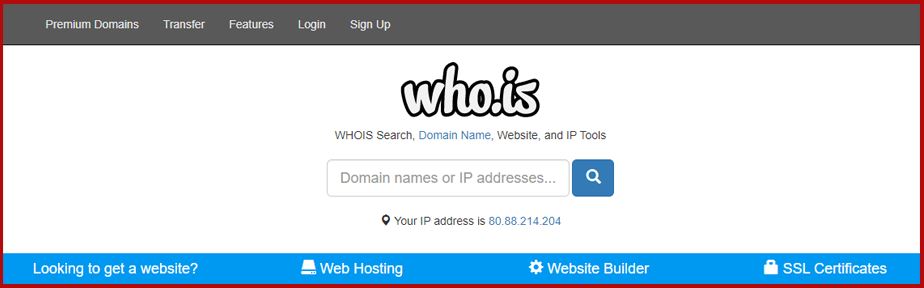
Image credit: https://who.is/
Page-Level Factors
#6 Keyword in Title Tag
When it comes to ranking highly in the Google SERPs, on-page SEO matters. This is the practice of optimising web page content for both search engines and users with optimising title tags being an important step. Title tags are an important on-page SEO signal as they help to pinpoint the relevancy of your page. Just like domain names, title tags that start with a keyword tend to rank higher than those with a keyword in the middle or at the end.
#7 Description Tag
Writing a meta description that sums up the content of a page is an essential SEO tactic as, while Google might not use the meta description tag as a direct ranking signal, the description tag can influence the click-through rate – and this is a key ranking factor. So, always produce description tags that will entice consumers, but ensure the description is relevant to the content they’re about to see to avoid a high bounce rate.
#8 Keywords in H1 Tag
The title tag tells Google what your page is about. The H1 tag provides another chance to make this loud and clear. Use every opportunity available to you in a bid to achieve the highest search ranking possible.
#9 Content length
Knowing how long your content should be is not always easy. One minute you might hear that short and snappy is ideal for mobile-first indexing and the next you’re reading that long-form content improves the user-experience. So what’s the answer? Well, according to research, longer content produces higher search rankings. Therefore, blogging about a subject in detail is a great way to get eyes on your brand, even if you want your site to contain bitesize information for mobile users.
Content length alone, however, isn’t the main reason why longer pages rank better. Indeed, longer pages allow room for more factors that actually help Google rank pages such as backlinks. Longer content has a higher probability of earning more quality backlinks as it tends to be more useful and comprehensive than shorter pieces.
#10 Table of contents
As an SEO expert, it’s your job to present your content in the best way possible to ensure Google doesn’t miss out on how wonderful you actually are. Using a linked table of contents is a tried and tested way to ensure Google can thoroughly grasp your content.
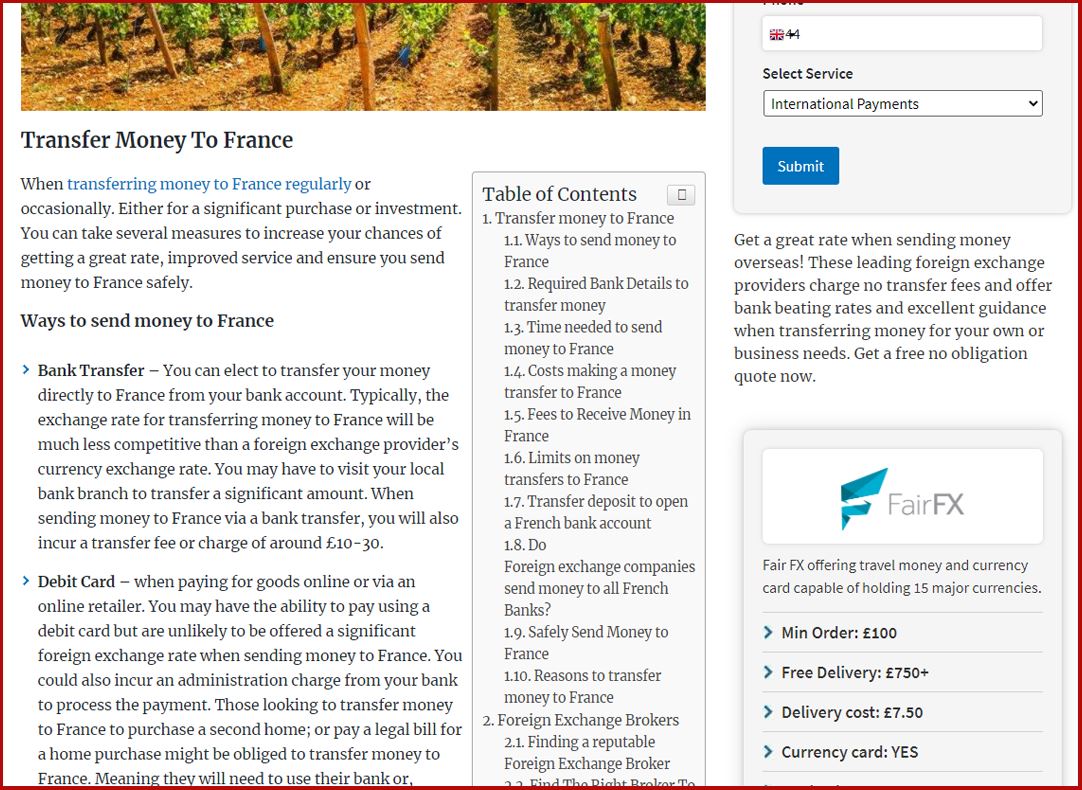
Image credit: https://www.foreignexchangelive.com/send-money-to-france/
#11 Keyword density
Once upon a time, popping as many keywords into your copy as you could was SEO at its best. These days, things are very different. While you want to include keywords to determine the topic of a page, keyword stuffing is widely condemned by search engines and should be avoided to avoid a search penalty.
When it comes to the placement of keywords, try to include them in title tags, headers and sub-headers, body content (around 3-5%) and link text among others. Having a keyword appear in the first 100 words of a page’s content is correlated to first page Google rankings. Remember to always write for humans and slip in keywords naturally so your text isn’t clunky to read.
#12 Covering topics in depth
Google doesn’t mess about when it comes to delivering useful content. The search engine knows that people want all information in one place and that they don’t want to spend time piecing together bits of information. This seems to be the reason why there’s a known correlation between depth of topic coverage and Google rankings. Pages that cover a particular topic in detail and from every angle are likely to rank higher than those who glaze over a topic or only include partial information.
#13 Google Hummingbird
The Hummingbird algorithm change revolutionised Google search. This is because it helped to bring meaning to the words that people were typing in their search queries. Instead of just matching vocabulary in the search results, the new algorithm actually understood the meaning of the query and matched it with relevant results. So, for example, if someone searched for ‘pay your bills through citizens bank and trust bank’ before the update, the search would simply bring up the bank’s homepage. Following the Hummingbird algorithm update, you’ll now receive the link about paying bills.
With this in mind it’s a good idea to create a specific product and service page based around commonly searched Google queries and keywords.
#14 Duplicate content
Duplicate content can impact search rankings. This is because if two pages share the exact same content, link juice can be split between the two which will weaken page authority. For this reason, it’s important to create unique content for every single webpage and never to copy and paste content from other websites onto your own. When used correctly, the Rel=Canonical tag may prevent Google from penalising your site for duplicate content.
Likewise, you shouldn’t copy content from a 3rd party website, or allow another 3rd party to copy your content. This is another instance of duplicate content. To check if anyone else is plagiarising content from your site, use a tool like Copyscape.
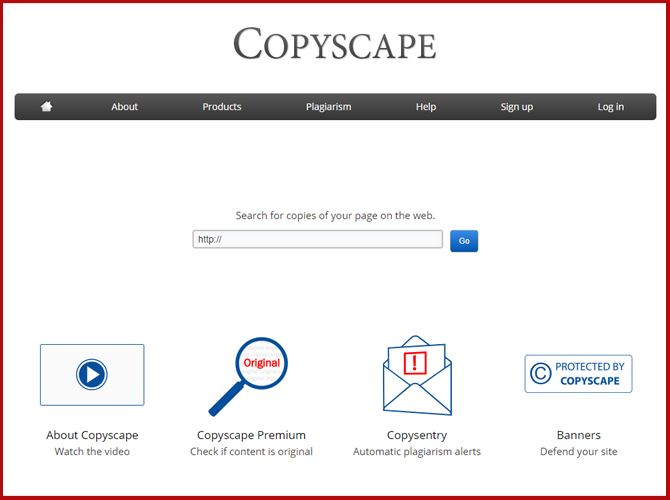
Image credit: https://www.copyscape.com/
#15 Image optimisation
Image optimisation creates many advantages such as better user experience, fast page load times and additional ranking opportunities. Without proper image optimisation, you’re wasting a valuable SEO asset, so be sure to create descriptive, keyword-rich file names.
#16 Content recency
Keeping your content regularly updated is a must in the SEO world. This is because the Google Caffeine algorithm change favours recently published or updated content, especially for time-sensitive searches. The Google Caffeine update was rolled out to meet increasing consumer demand. For example, searchers want to find the latest relevant content and publishers expect to be found the instant they publish.
#17 Significant content updates
Switching around a word or two is likely to be less beneficial than rewriting entire paragraphs. Google wants to see significant edits and changes in order to be sure that the content they’re delivering for a search query is as fresh as possible. Historical page updates fall under similar territory. When it comes to freshness, Google also keeps an eye on how often a page has been updated, whether it’s daily, weekly or less than once a year. Frequency of page updates plays a role in page freshness.
#18 Linking to sites of authority
Want to be cool? Then you hang out with the cool kids, right? The same sort of logic applies to SEO and Google rankings. Essentially, industry studies have shown that linking to sites of high authority sends trust signals to Google and this can do you an SEO favour. But there are a few things to be aware of, including outbound link themes. It’s thought that Google uses the pages you link to as a relevancy signal, so you need to make sure they’re aligned with the content of your page to avoid giving out mixed SEO messages that might impact bounce rates and, in turn, rankings.
#19. Grammar and spelling
The jury’s still out as to whether or not this is a significant ranking factor – but one thing’s for sure: when people visit your website, they’ll form an opinion about your brand. If your site is littered with errors, they may not visit your site again and your views may drop. And this in turn can impact the authority and ranking of your site. So, get that spell checker working. Or simply hire a decent editor.
#20 Mobile-friendly
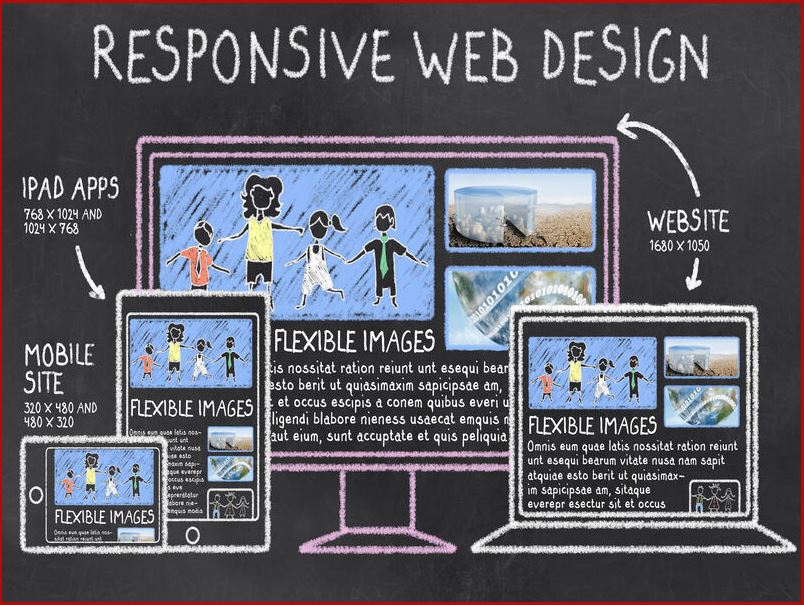
Google takes a mobile-first approach. The search engine gives priority to websites that display well on mobile devices and offer a good overall user experience. Therefore, mobile optimisation should certainly be a main priority for any SEO expert.
#21 Content hidden behind tabs
According to Google’s John Mueller, content within ‘click to expand’ menus or ‘tabs’ may be ‘discounted’ since Google knows you’re hiding it from the end user. Google may not rank the page for the content within those sections because Google knows users do not see the content by default. So, a little bit of site restructuring may be in order.
#22 Internal linking structure
Creating a website that ranks highly in Google is more complex than it might seem. There are many things to consider including the internal linking structure of a site. Essentially, the number of internal links to a page indicates its importance relative to other pages on the site. Therefore, more internal links equals more importance, especially when the links come from pages of authority. And you can structure your site in such a way to ensure your heavyweight pages, such as those that’ll generate revenue, are more likely to rank over pages with less value. Pages with no internal links risk going unindexed for long periods of time, which will of course impact rankings.
#23 Broken links
Too many broken links on a site suggests that the site might have been abandoned or requires significant maintenance. Broken links impact the overall user experience, which in turn impacts search engine ranking results. Use a great tool like Dr Link Check to analyse your site for broken links and then fix them.

Image credit: https://www.drlinkcheck.com/
#24 URL length
Industry studies have revealed that excessively long URLs may hurt a page’s search engine visibility. It’s thought that short URLs tend to have a slight edge in Google’s search results.
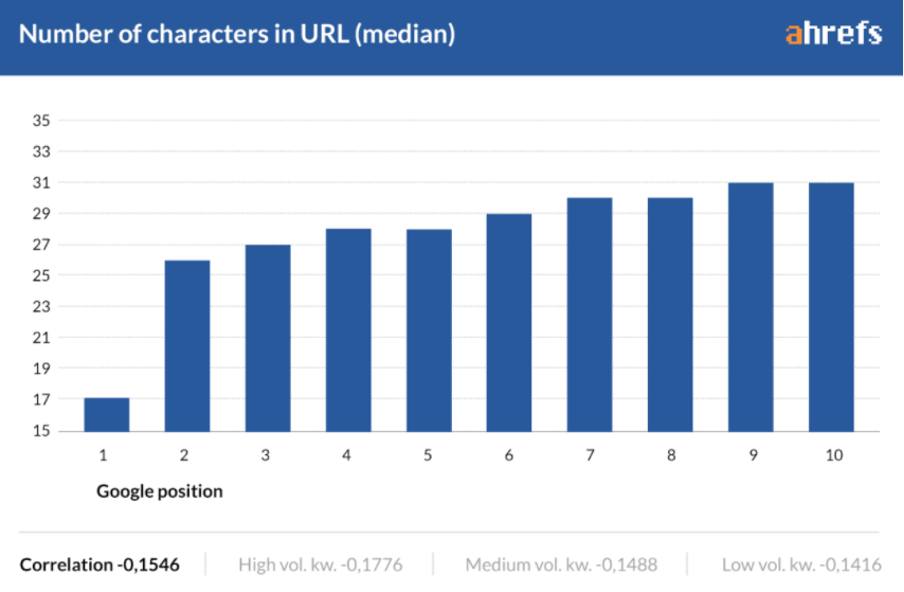
Image credit: https://ahrefs.com/blog/on-page-seo/
#25 Page category
Page categories are relevancy signals which again tell Google what your content is all about. A page that’s part of a closely related category may get a relevancy boost compared to a page that’s filed under an unrelated category.
#26 Bullets and numbered lists
What would you prefer: a 2,000 word block article with very little paragraphs and nothing to make each section more interesting? Or an easy-to-read piece complete with bullets and numbered lists? Chances are you’d much rather set your eyes on the latter as it’s more user-friendly. Google is likely to prefer content that makes absorbing information a breeze.
#27 Page ranking for other keywords
Ranking highly for a keyword you’ve optimised for is great news. But if your page ranks for several other keywords, it may give Google an internal sign of quality. In a recent How Search Works report, Google states:
“We look for sites that many users deem to value for similar queries.”
Good to know!
#28 User-friendly layout
Regarding content, always think about the layout of each page as this can impact search engine rankings. Indeed, Google specifies that, “The page layout on highest quality pages makes the main content immediately visible.”
Site-Level Factors
#29 Valuable content
Google’s Webmaster Guidelines advise people to, “create websites with original content that adds value for users. This is particularly important for sites that participate in affiliate programs. Typically, affiliate websites feature product descriptions that appear on sites across that affiliate network. As a result, sites featuring mostly content from affiliate networks can suffer in Google’s search rankings, because they do not have enough added value content that differentiates them from other sites on the web.”
#30 Contact Us page
Did you know that something as simple as a ‘Contact Us’ page could positively impact your search rankings? That’s right, the Google Quality Document confirms that they prefer sites with an “appropriate amount of contact information.” So, make sure all of your information is available and up-to-date.
#31 TrustRank
TrustRank is an algorithm designed to help Google combat spam. It conducts link analysis to separate useful webpages with genuine and unique content from spam and helps the search engine rank pages in SERPs. TrustRank is believed to be a significant ranking factor and a Google Patent entitled ‘search result ranking based on trust’ seems to back this up.
#32 Presence of a Sitemap
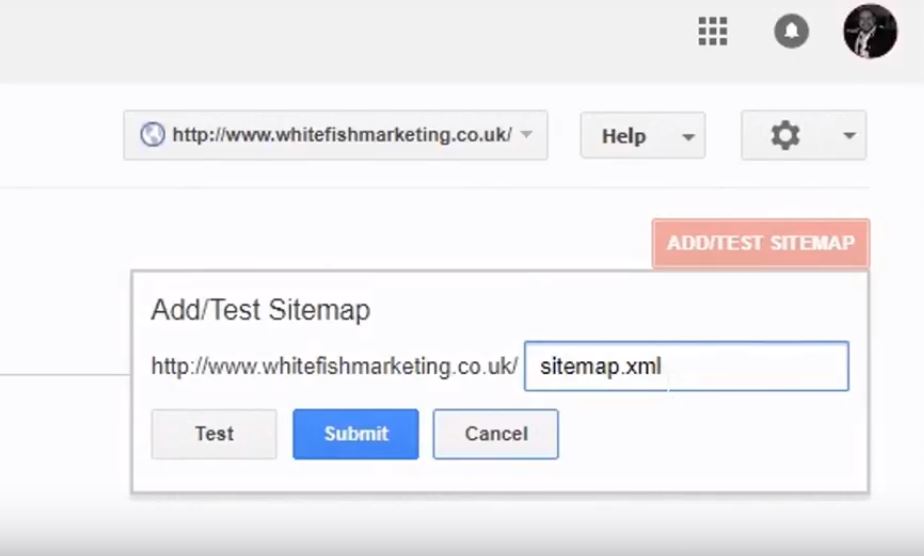
Adding a sitemap to Google Search Console will help your site to be discovered and improve visibility. It can be done in just a few simple steps but be sure to remove any out-of-date sitemaps to avoid confusion.
#33 Site Downtime
Remember, Google is looking to deliver the very best content possible. So if your site is always down or having loading issues, this is not great for SEO and can even result in deindexing. Always aim to fix issues that cause downtime quickly or look into finding a better host if it’s a host-related issue.
#34 Server location
Where your site ranks in different geographical regions depends largely on the server location. This is especially true for geo-specific searches.
#35 HTTPS as a ranking signal
Google confirmed that they used HTTPS as a ranking signal, stating:
“Security is a top priority for Google. We invest a lot in making sure that our services use industry-leading security, like strong HTTPS encryption by default. That means that people using Search, Gmail and Google Drive, for example, automatically have a secure connection to Google.
“Beyond our own stuff, we’re also working to make the Internet safer more broadly. A big part of that is making sure that websites people access from Google are secure. For instance, we have created resources to help webmasters prevent and fix security breaches on their sites.
“We want to go even further. At Google I/O a few months ago, we called for “HTTPS everywhere” on the web.
“We’ve also seen more and more webmasters adopting HTTPS (also known as HTTP over TLS, or Transport Layer Security), on their website, which is encouraging.
“For these reasons, over the past few months we’ve been running tests taking into account whether sites use secure, encrypted connections as a signal in our search ranking algorithms. We’ve seen positive results, so we’re starting to use HTTPS as a ranking signal.”
#36 Terms of Service and Privacy pages
E-A-T stands for Expertise, Authority and Trust – three things you certainly want to be known for. These three things can also determine your site’s legitimacy and ranking power so it’s important to do all you can to ensure you stand out in these areas. E-A-T inspired ideas include providing a Terms of Service and Privacy page on your site as this helps to tell Google that you’re a trustworthy member of the internet who cares about reputation.
#37 Breadcrumb navigation
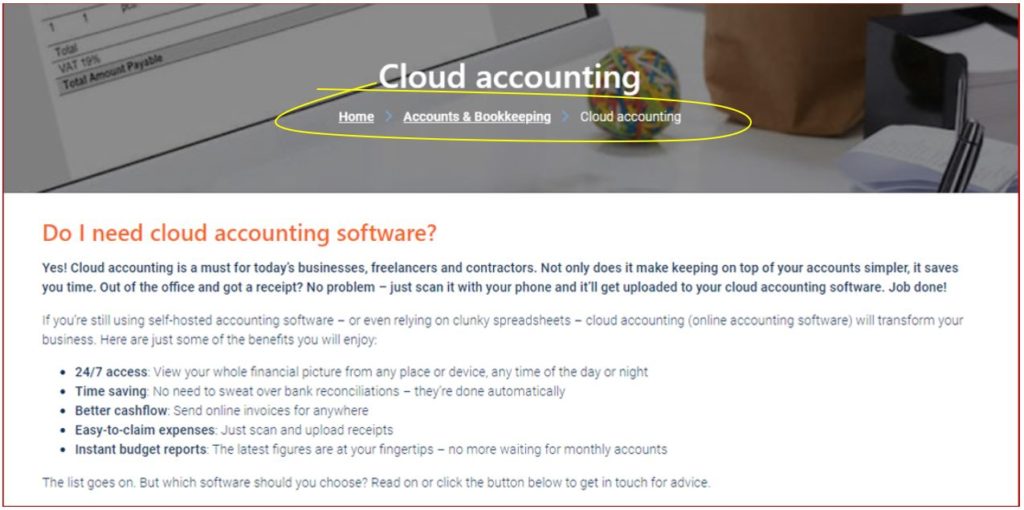
When it comes to web design, always have user-friendly site architecture at the front of your mind. Put simply, you want to make site navigation easy both for users and search engines. Well-labelled breadcrumbs make it obvious which part of a site you’re visiting and helps Google understand the relevancy of a page.
#38 YouTube
In this day and age, there’s simply no excuse for a lazy or unimaginative content strategy. There’s loads you can do to get eyes on your brand with YouTube videos given preferential treatment in search engine results pages. This is worth remembering when you sit down to draw up your next campaign. Creating YouTube playlists will also make your content more visible and encourage users to click through the list, boosting hits and rankings.
#39 Use of Analytics and Google Search Console
It’s thought that having these two programs installed on your site can improve page rankings. This might be because Google has more data to work with including accurate backlinks. Google has denied this as a myth but using Analytics and Google Search Console will also give you an idea of how well your pages are ranking and allow you to make necessary improvements to your SEO approach.
#40 Site Reputation
The reputation of your site matters, which is why it’s a good idea to include user-generated reviews where possible. Reviews on sites like Yelp may also influence the ranking of your site. As a top tip, make the most of social listening tools as this will help you to identify what people think of your brand. Knowing your strengths and weaknesses will allow you to make changes and rectify bad PR where necessary.
Backlink Factors
#41 Linking domain age
Getting backlinks from sites of authority is a good first step. But did you know that backlinks from aged domains may be more powerful than new domains? Therefore it’s a good idea to look at the history of each site before you make a backlink connection.
#42 Number of Backlinks
According to the analysis of 11.8 million Google search results, pages with a lot of backlinks rank above pages that don’t have as many backlinks. In fact, the #1 result in Google has an average of 3.8x more backlinks than positions #2 through to #10.
#43 Alt tags for image links
Alt text acts as anchor text for images. Including a keyword in these alt tags can boost your SEO rankings.
#44 Authority of linking page
As previously discussed, who you associate with matters in the world of SEO. The authority (PageRank) of the referring page is, and always has been, an important ranking factor.
This is what Google has to say on the matter.
“Make sure that other sites link to yours. Links help our crawlers find your site and can give your site greater visibility in our search results. When returning results for a search, Google uses sophisticated text-matching techniques to display pages that are both important and relevant to each search. Google interprets a link from page A to page B as a vote by page A for page B. Votes cast by pages that are themselves ‘important’ weigh more heavily and help to make other pages ‘important.’
“On the contrary, links from bad sites or sites of poor authority can actually harm your ranking so you need to have a firm understanding of your linking strategy.”
#45 Links from competitors
Believe it or not, working alongside competitors could actually improve your SEO strategy. It’s thought that links from other pages ranking in the same SERP may be more valuable to a page’s ranking for that particular keyword. In fact, some leading SEOs believe that Google will only fully trust your site and rank it higher if you get a link from an ‘expected’ site in your industry. In the eyes of Google, if web pages from the same sector as your business trust your content enough to link to it, then this is a big thumbs up.
To back this up, Google gives extra love to links from pages that contain your page’s keyword in the title. The whole ‘experts linking to experts’ concept is attractive to Google as a search engine as it helps to prove the trust and authority of particular sites.
#46 Contextual links
When it comes to SEO, get yourself a good content writer or team that knows how to incorporate contextual links into copy. In short, links embedded naturally inside a page’s content so that they look like they belong there are considered more powerful than links on an empty page or found elsewhere on the page.
#47 Excessive 301 redirects
Sometimes, 301 redirects are necessary. They’re a good way to point content that’s no longer relevant to a more recent page, without having to delete old content altogether. That said, backlinks coming from 301 redirects dilute some PageRank, according to a Webmaster Help Video.
#48 Country TLD of referring domain
As a digital business, knowing your audience is essential. If the large majority of your consumers are based in a different country, you might want to adapt your SEO strategy accordingly – and there are many things you can do. For example, getting links from country-specific top-level domain extensions such as .de, .cn, .co.uk, may help you to rank better in that particular country.
#49 Link location on a page
Experienced content producers and SEO experts know that link location matters. While all links should appear naturally, they should also be placed as early in the content as possible, preferably in the first paragraph. Links that appear at the beginning of a content piece are thought to carry slightly more weight than those that are placed at the end. Think about which keyword you want to rank for the most for each page and ensure that’s included in the anchor text for the very first link used.
Note that where a link is embedded can also impact the ranking of a page. For example, links placed in the body content tend to hold more weight than those in the footer or sidebar area.
#50 Linking domain relevancy
We’ve spoken about getting links from competitors and about looking for links to content that’s relevant to what you’re talking about on a particular page. All of this is important as a link from a site in a similar niche is significantly more powerful than a link from a completely unrelated site. A link from a relevant page also passes along more value and it’s thought that since the Hilltop algorithm update, links from ‘hubpages’ are also vital. These are considered ‘top resource’ pages that provide a wealth of information about a topic.
#51 Link velocity
Link velocity describes the speed of link growth to a page or domain. Link velocity can be measured in new links per month or new linking root domains per month. A site with positive link velocity usually enjoys improved rankings in search results pages as it shows a site is increasing in popularity. On the other hand, negative link velocity can significantly reduce rankings as it’s a sign of decreasing popularity.
#52 Being a Wikipedia source
This one is a little controversial, but many SEOs believe that is linked to as a Wikipedia source shows that your site is trustworthy and authoritative which can, in turn, boost rankings.
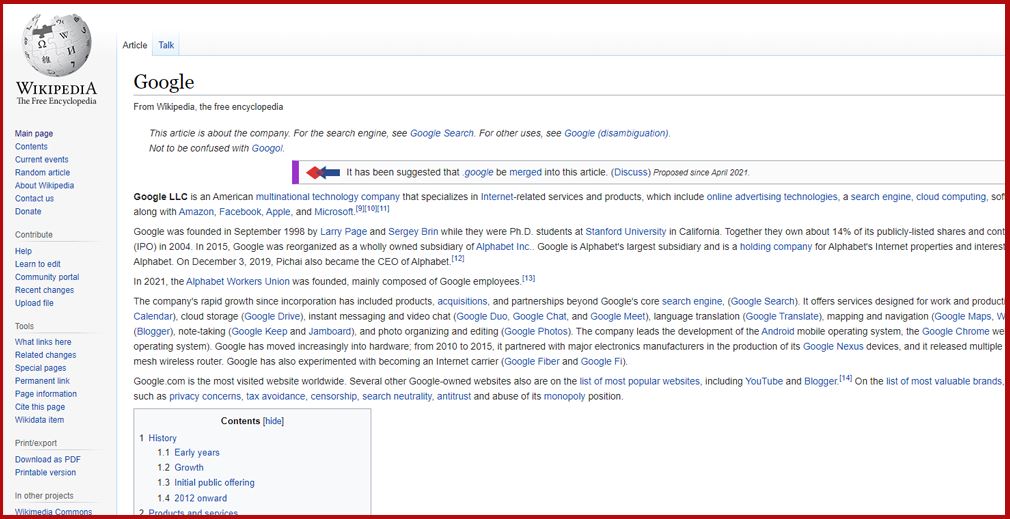
Image source: https://en.wikipedia.org/wiki/Google
#53 Natural link profile
Link building is a time-consuming process that requires careful thought and attention. Building relationships with site owners in order to get the best backlinks is ideal as it’ll help you to create a natural link profile. This will rank more highly than a site that uses obvious black hat strategies in a bid for authority – such as paying for backlinks of a poor quality. As an SEO, don’t be tempted by ‘quick fix’ options as this may result in a penalty.
#54 Forum links
Be very careful when it comes to forum links. Because of industrial-level spamming, Google may significantly devalue links from forums. Google is not a fan of link schemes that are intended to manipulate PageRank or a site’s ranking on Google search. Here’s what they have to say on this matter.
“Any links intended to manipulate PageRank or a site’s ranking in Google search results may be considered part of a link scheme and a violation of Google’s Webmaster Guidelines. This includes any behaviour that manipulates links to your site or outgoing links from your site.”
The following are examples of link schemes which can negatively impact a site’s ranking in search results:
- Buying or selling links that pass PageRank. This includes:
- Exchanging money for links, or posts that contain links
- Exchanging goods or services for links
- Sending someone a ‘free’ product in exchange for them writing about it and including a link
- Excessive link exchanges (“Link to me and I’ll link to you”) or partner pages exclusively for the sake of cross-linking
- Large-scale article marketing or guest posting campaigns with keyword-rich anchor text links
- Using automated programs or services to create links to your site
- Requiring a link as part of a Terms of Service, contract, or similar arrangement without allowing a third-party content owner the choice of qualifying the outbound link, should they wish
#55 Word Count
The value of longer content has already been discussed and it seems that links from longer content pieces are also more valuable than links from shorter snippets. This is because long-form content typically includes more keywords, more backlinks and more information which can, in turn, improve the user-experience.
#56 Quality of linking content
Of course, when it comes to linking, you want to find sites of high authority. The content on this type of site will typically be of a higher quality and will therefore pass on more value than links containing poorly written or spun content.
User Interaction
#57 RankBrain
If you want to perform well in the SERPs, you need to optimise for RankBrain. This is Google’s AI algorithm and the search engine’s third most important ranking signal. RankBrain has two main jobs – to understand search queries (keywords) and to measure how people interact with the results (user satisfaction). RankBrain understands the meaning behind a search query and therefore helps to deliver the most relevant content.
#58 Bounce rate
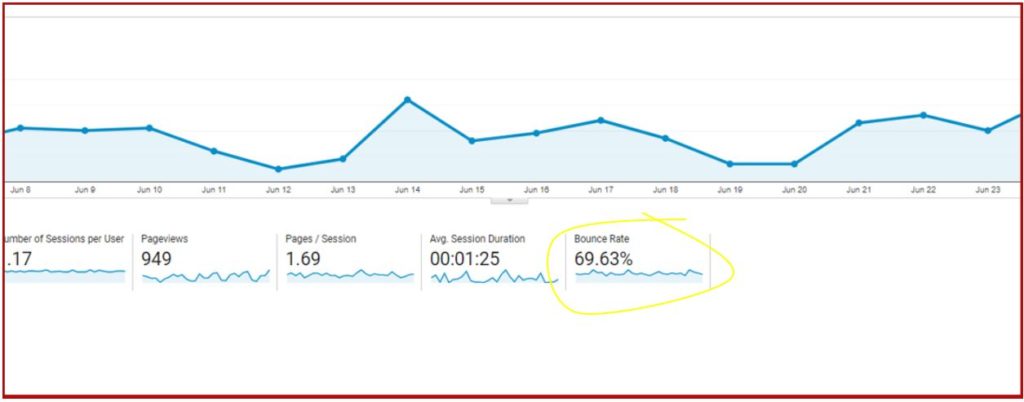
Bounce rate with regards to rankings remains a topic of debate. Some SEOs feel that it’s not overly significant in a world where patience and tolerance are well known among users. Others believe bounce rate shows that the site isn’t living up to expectations and therefore has weaker authority than a site that can keep the attention of users for longer.
#59 Direct traffic
Studies have shown a significant correlation between direct traffic and Google rankings. Sites with a lot of direct traffic are deemed to be of a higher quality than sites that get little to no direct traffic. Along the same thread, sites with plenty of repeat visitors are also thought to get a search ranking boost as it shows they’re willing to view the content more than once.
#60 Pogosticking
If someone clicks on the top result of a search, then immediately leaves that page and clicks on the next search result and so on, this is called pogosticking. Google’s job is to deliver relevant content, remember. So if they realise that people aren’t getting what they want from the very top search results, these pages could experience significant ranking drops.
#61 Bookmarked pages
Users bookmark pages they want to see time and time again. This is a positive sign for Google who collects Chrome browser usage data. Pages that get bookmarked in Chrome have the potential to be boosted up the search results page.
#62 Number of comments
User interaction is a sign that people are engaging with your brand and signals to Google that you’re producing good quality content. Gary Illyes from Google confirmed on Twitter that having a thriving community helps with rankings. He said, “A healthy, thriving community on a site, that can help a lot” when it comes to Google rankings.
#63 Dwell time
The more time people spend on your site, the more likely they are to follow a call to action (CTA), be it to sign up for a newsletter or make a purchase. The time spent on a page when coming directly from a Google search is called the dwell time and is something Google takes a good hard look at to decide if your page met the needs of a user. Of course, the more time someone spends on your site, the higher you’re likely to rank.
This is why user-experience is so important. If your website is full of colour clashes, pop-up ads and chunky content with no imagery, people are more likely to run away faster than a site that’s beautifully presented and easy to navigate. Indeed, Google may penalise sites that display full page ‘interstitial’ pop-ups to mobile users. Of course, content matters too. Be sure to use plenty of gripping headers and subheaders, numbered lists, bullets and other techniques that keep people reading as this will boost the dwell time.
#64 Core Web Vitals
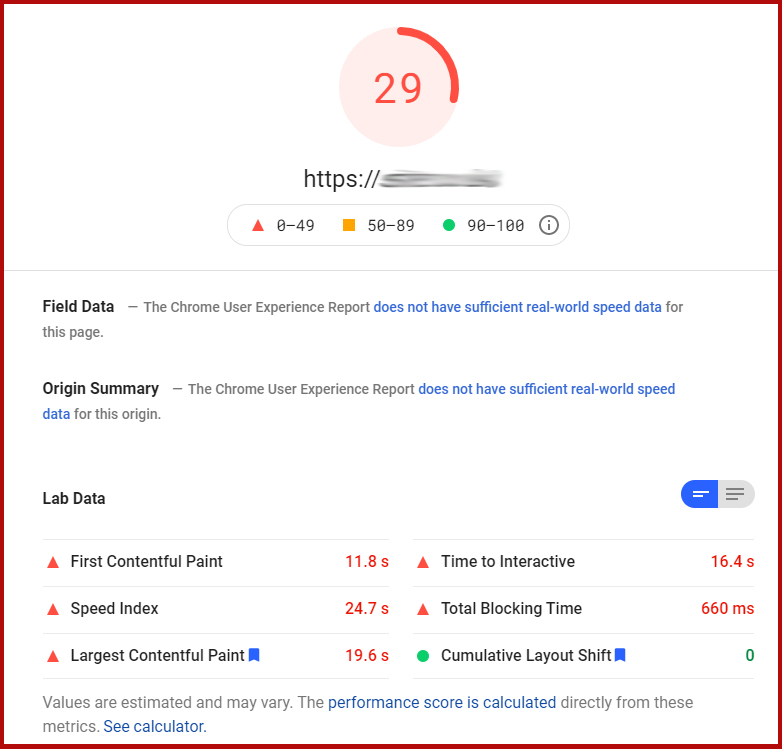
Google now uses Core Web Vitals metrics to measure the user experience a webpage is providing to visitors. Webpages that rank highly in Core Web Vitals will likely see a boost in search rankings. So what exactly are the Core Web Vitals mentioned? Well, Core Web Vitals include:
- Largest Contentful Paint – this measures page loading performance
- Cumulative Layout Shift – this measures ease of interaction
- First Input Delay – this measures the visual stability of a page from a user’s perspective
Core Web Vital information can now be accessed via Google Console so it’s a good idea to check your performance seeing as this is now a significant ranking factor.
Special Google Algorithm Rules
#65 User browsing history
Every single Google user gets a unique set of search results based on browser history. Websites that you visit frequently get a SERP boost for your searches as a result.
#66 Featured Snippets
Featured Snippets – otherwise known as Position 0 – appear above the main search results in Google. They drive traffic to relevant pages and are considered to be the most desirable spot for a search query result. According to studies, Google chooses Featured Snippets content based on a combination of content length, formatting, page authority and HTTPs usage. Google also wants to answer search queries directly and concisely and is looking for easy-to-grab content that’ll do this. For this reason it’s a good idea to craft question and answer content around specific keywords and Google search queries for your brand as this will help your content to be relevant enough to feature in the Feature Snippets section.
#67 Safe Search
As an SEO professional, know who your target is and craft content that’s appropriate. If not, you could miss out on significant viewership. For example, search results with curse word or adult content of any kind won’t appear for people with Safe Search turned on.
#68 Local searches
Google often places local results above the ‘normal’ organic SERPs. For this reason it’s extremely important to claim your Google My Business page and to ensure all your details are up-to-date and correct. This will also ensure you appear on maps for those looking to easily locate a physical site, be it a hairdressing salon or a car garage.
Brand Signals
#69 Brand name anchor text
Is your site optimised for a branded search? If not, you could be missing a very obvious trick. Users making a branded search have already heard about you and have a high intent of making a purchase or finding out more about what you have to offer. Therefore, when they type your name into Google, make sure they see your website in the top spot as well as all of your contact information pulled from your Google My Business Page.
Brand name anchor text is also a simple but strong brand signal that tells Google your page is relevant to a branded search query.
#70 Branded searches
People searching for your brand using a specific brand search term shows Google that your site is a real brand. This helps to boost trust.
#71 Social media following
If your site is linked to a branded Twitter or Facebook profile with a lot of followers, this also signals a popular brand. Similarly, most real brands have a presence on LinkedIn and therefore Google can use this to ensure you’re a genuine company. Former Google CEO, Eric Schmidt, famously said back in 2013, “Within search results, information tied to verified online profiles will be ranked higher than content without such verification, which will result in most users naturally clicking on the top (verified) results.”
This makes complete sense if you think about it. Illegitimate or spammy websites are less likely to be upfront about their team or have a strong social media presence. Their actions will be a lot shadier in comparison to a genuine brand who has a Meet the Team or About Us page on their website, linked to professional LinkedIn accounts. Essentially, reputable sites are willing to be accountable for their online presence and business model.
#72 Legitimacy of social media accounts
Google is on the ball and won’t be fooled by fake social media accounts with few followers. Indeed, a social media account with 10,000 followers and one measly post ‘for the sake of it’ is probably interpreted a lot differently than another 10,000-follower strong account with lots of interaction including user-generated content. Google even filed a patent for determining whether or not social media accounts were real or fake.
#73 Brand mentions
Google is likely to look at brand mentions even if the mention isn’t hyperlinked. Depending on the context and the authority of the page the brand is mentioned on, this could impact rankings for the better.
Google’s SEO ranking factors for 2021 are extensive and complex but this allows for the very best content to be delivered by the world’s top search engine.
If you require a professional SEO agency to help with your digital marketing, contact Kent SEO agency, Whitefish Marketing on 01303 720 288 or head to our contact us page.