Understanding Google PageRank
Google PageRank was huge back in the day. It was the metric every SEO cared about and wanted to improve. As a gateway to digital authority, a high PageRank could drive more traffic and increase online exposure. But is it such a big deal today? Let’s find out…
Google PageRank Algorithm Explained
Without beating around the bush, PageRank is a complex topic. Essentially, a mathematical formula is used to score the value of a page based on the quality and quantity of the pages linking to it. The higher the PageRank score of a page, the more authoritative that page is considered to be. Factors taken into consideration when creating a score from 0 – 10 using a logarithmic scale include the number of inbound links and external links as well as the PageRank of those links just mentioned. This means that any old link to your website won’t do. In order to get a decent PageRank, you must have links pointing from sites that are themselves of high authority.
Think of it this way: If you’re a good person with a respectable character, would you hang around gang members or criminals? Who you associate with can impact your reputation. And the same applies to website links when it comes to PageRank. After all, Google is looking to deliver the content of the highest quality to users and therefore is constantly on the lookout for signs that it can trust what you’re delivering.
The PageRank Toolbar
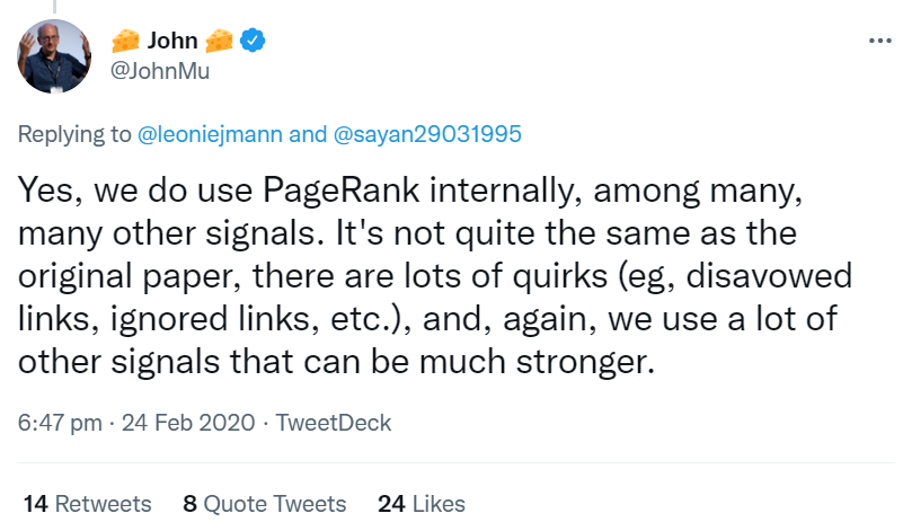
There used to be a toolbar that displayed the PageRank of any website you visited, but this was removed in 2016. Web owners no longer have easy access to this metric meaning a fair amount of guesswork is required. But somewhat unfairly, Google still uses PageRank as a ranking factor as confirmed in a 2020 tweet by Google’s John Mueller.
Tips for a Better PageRank
So what influences Google PageRank and what can you do to positively influence this score? Here are a few hints.
#1 Focus on Backlinks
Put simply, the more high-authority websites that link to you, the higher your PageRank will be. Backlinks are extremely important so it’s a really good idea to spend time creating strong, organic relationships with influencers and community members in your niche. You should also focus on creating engaging content loaded with stats and interesting facts that authoritative sites will want to share. The same applies to videos, webinars, infographics and other creative assets. Another great way to improve your backlink strategy is to share your content via social media, tagging relevant people so they can share it too. The more exposure your content has, the more likely it is to be picked up and linked to.
#2 Prioritise Internal Linking
Internal linking is one of the easiest ways to boost the PageRank of specific pages. But it’s often overlooked or underrated by SEO experts. Bypassing ‘link juice’ from one page to another, you can organically improve the traffic and rankings of site pages. For example, your homepage is likely to have the highest PageRank. This is because it’ll probably have the highest number of websites linking to it. Therefore, every link from your homepage to another page on your website will boost the authority and PageRank of the page being linked to. It really is that simple.
For a tailored SEO strategy, contact Whitefish Marketing today. As a Kent SEO agency working with top brands from multiple industries, you’ll get all the guidance and support you need.